The moment you spot a pest or a nest, your first instinct is to get rid of it immediately. You run to the pesticide store, grab a spray, and apply it without thinking twice. But what if that doesn’t fix the problem? Or worse, what if it makes things worse? London homeowners must know the dangers of DIY pest control— most people tend to overlook or dismiss it as trivial.
Picture this: you get a deep cut, but secretly, it’s turning into an infection. Instead of seeing a doctor, you just cover it with a bandage, thinking it’s fine. Meanwhile, the infection spreads unnoticed. DIY pest control can be just like putting a bandage on an infected wound—you might not realise there’s a hidden infestation. Today, we’ll look at why DIY pest control often fails and the risks of improper treatment. Let’s get into it.
What is DIY pest control, and why does it fail?
The term DIY means “Do-It-Yourself,” so DIY pest control is all about handling pest issues yourself. While DIY approaches may solve minor pest problems, they fall short in major infestations.
Here’s why DIY pest control often fails:
Root Cause Overlooked: DIY methods often miss identifying the actual source of the pest problem, so it keeps coming back.
Surface-Level Solutions: Many DIY sprays only kill what’s visible and don’t reach hidden eggs or nests, leaving the infestation intact.
Incorrect Pest Identification: Homeowners can confuse pests, such as mixing up different cockroach species, leading to incorrect treatment choices.
Wrong Application: Overapplication or incorrect spraying can be ineffective or hazardous, wasting time and money.
Limitations of Over-the-Counter Products: These are less powerful than professional-grade pesticides and aren’t designed to target specific pests effectively.
Exacerbating the Problem: Weaker pests die off, but the stronger ones survive, reproduce, and make the infestation worse over time.
What are the Dangers of DIY Pest Control?
Opting for DIY pest control might seem like a simple way to cut costs or avoid professional help, but it’s not always the safest choice when you consider the bigger picture. If you choose the DIY route, be aware of the common dangers involved. Let’s explore the top risks of DIY pest control:
1. Health and Safety Risks:
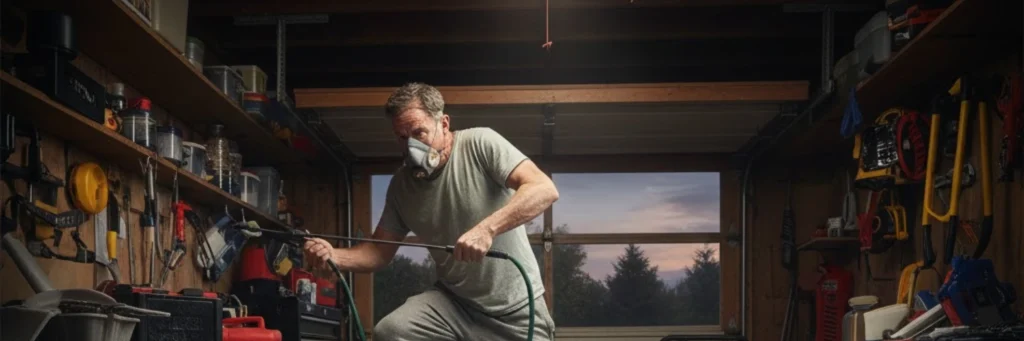
Using toxic chemicals without caution can be deadly. Misuse or direct contact can lead to serious health risks, such as:
Respiratory Issues: Foggers releasing VOCs or particles can cause asthma, coughing, wheezing, shortness of breath, nausea, dizziness, or headaches.
Accidental Poisoning: Sweet-tasting poisons attract pests but also pose danger to pets and children if applied improperly.
Skin and Eye Problems: Residues can cause rashes, redness, itching, or burning in the skin and eyes.
Disease Transmission: Handling pests or their droppings during DIY pest control can expose you to germs carrying dangerous illnesses.
Pest Defence Responses: Disturbing pests can provoke attacks; yellow jackets, wasps, and hornets may sting multiple times or swarm.
Injuries from Equipment and Heights: Trap-setting or reaching nests at heights can result in injuries like broken bones or falls.
2. Property Damage and Financial Pitfalls
Pests aren’t just a nuisance—they can cause real property damage and hit your wallet hard. Rodents, for example, chew furniture and wires, increasing fire risks. Beyond property damage, pests can drain your wallet.
Property Damage: Using liquid sprays might stain floors, walls, or fabrics. Rodents chewing on electrical wires can cause fires. Termites tunnel through wood and feed on cellulose, leading to structural issues in beams, walls, and supports—necessitating costly repairs.
Financial Concerns: DIY pest control can backfire. Improper chemical use might fail to eliminate pests and even worsen infestations. Multiple treatments mean more pesticides, which get expensive. Professional pest control services become necessary for larger infestations. Plus, expenses for cleaning dead pests and removing lingering odours add up afterwards. Ultimately, poor DIY efforts can lead to significant financial strain.
3. Misidentification and Escalation of Infestation
Treating pests yourself with the wrong approach is like treating your heart with kidney medication— it simply won’t work. DIY pest treatments often pose dangers due to misidentification. For example, mice are frequently mistaken for voles, rats, or shrews.
Misidentifying pests leads to using the wrong pesticides and adopting ineffective strategies. This only drains your wallet without fixing the core issue. Store-bought chemicals tend to be weak, and DIY treatments usually only eliminate the pests you see, leaving hidden ones to grow unchecked.
Another danger is pest resistance from improper pesticide use. You cannot address the root cause like a professional can. Failed DIY attempts can make pests more aggressive, leading to a tougher, more severe infestation.
4. Other DIY Risks
While DIY pest treatments might work for minor issues, they can be dangerous in larger infestations. Beyond health risks and property damage, they pose other serious threats.
Killing Beneficial Insects: Many DIY sprays target pests indiscriminately, often harming beneficial insects like bees and butterflies, which play crucial roles in pollination and ecosystem maintenance.
Environmental Pollution: Pesticides can leach into soil and groundwater, polluting ecosystems and making areas toxic for wildlife and humans.
Legal Risks: For industrial or business spaces, commercial pest control is a legal requirement. Attempting DIY solutions can result in legal penalties and damage your reputation, especially if unapproved products are used.
Why is professional pest control better than DIY?
When it comes to pest control, professionals beat DIY efforts hands down. Here’s why professional pest treatment is considered better than DIY:
| Considering Factor | Professional Pest Control | DIY Pest Control |
| Product Quality and Effectiveness | Use highly potent Professional-grade products | Uses store-bought low-potential retail pesticides. |
| Expertise | Done by extensively trained professionals | Homeowners do themselves |
| Health & Safety | Highly efficient method, ensures health and safety protection. | Improper use can trigger health issues like asthma, allergic reactions, respiratory issues, etc. |
| Treatment Outcomes | Identifies the root cause, | Fails to detect the root cause |
| Protection Guarantee | Offers guaranteed protection and prevention | Temporary fixes. Not guaranteed. |
| Focused Application | Targets the focused pests only. | Indiscriminate targets, leading to the death of beneficial insects. |
| Risks of Accidents or Injuries | Low risks as handled by certified experts | High risks of getting injured |
| Pest’s reaction or adaptation | Pests can’t combat strong pesticides | Pests build resistance against the low-potency pesticides. |
When to Call Professionals?
Knowing when to tackle a pest problem yourself and when to call in the experts is crucial. Here are key indicators when to call pros:
- Pests are still around after multiple DIY attempts.
- When your home is infested with aggressive pests like wasps or stubborn ones like rodents and bed bugs.
- If you notice signs of high infestation, such as gnaw marks, structural damage, droppings, stains, exoskeletons, or bite marks.
- You spot nocturnal pests active during daylight hours.
- If you suspect chemical misuse or improper pest control methods.
- When vulnerable individuals such as the elderly, sick, pets, or children are present at home.
- If your commercial space is infested, you have legal obligations to address the pest problem.
- When you’re nervous or lack confidence to attempt a DIY solution.
In Conclusion
Using DIY methods is tempting for small pest problems, but the dangers shouldn’t be overlooked. What if something goes wrong? DIY isn’t always reliable, and mistakes can be costly. So London homeowners should be aware of the dangers of DIY pest control before attempting a treatment on their own. If DIY treatments are misapplied or left unchecked, the consequences can be much worse than you might imagine.
For safe and effective pest control, call a trusted company like ED Pest Control. Our experts identify the root cause of the problem and thoroughly remove pests, helping to prevent future invasions.
FAQ About DIY Pest Control Risks
Can I sleep in my house after pest control?
Yes, you can sleep in your house after pest control, but you must strictly follow the guidelines provided by your pest control experts. Allow the pesticides to dry completely before re-entering. Drying time varies: some treatments require a 2-4 hour wait, while others, such as fumigation, may take up to 24 hours.
Is DIY pest control safe?
DIY pest control isn’t always safe and doesn’t guarantee the same level of safety as professional services. Using the wrong products or methods can risk your health, damage your property, or worsen the pest problem.
Is it bad to inhale pesticides?
Absolutely. Pesticides are toxic by design, and inhaling them can lead to immediate health problems or long-term issues like respiratory damage.
Do I open windows after pest control?
Yes, opening windows after treatment helps with ventilation. Make sure to follow the pest control technician’s advice since some treatments might have specific airing instructions.
How often should you do pest control at home?
Typically, pest control should be done every 3 to 6 months. For severe infestations or persistent pests, more frequent treatments, such as bi-weekly or weekly, might be necessary.
What is the most difficult pest to get rid of?
Bed bugs, rodents, cockroaches, and termites top the list of pests that are hardest to get rid of because of their resilience and stubbornness.