
It starts with blurry hints. A scratching sound behind the wall. Tiny droppings under the kitchen sink. A chewed cereal box in the pantry.
Then you notice more signs, and suddenly, they begin to connect, leading to a clear identification of the pesky nuisance. Rats.
Rats constantly search for food, water, and a warm place to nest. Once they find all three, they can settle into your home surprisingly quickly. Rats can squeeze through openings as small as 15 to 20 mm, climb pipes, and swim through drains. They reproduce fast, contaminate food, spread bacteria, and cause costly damage by gnawing through wood, insulation, and electrical wiring.
Once infested, rats hardly go away. Do you know how to get rid of rats in the house? In this guide, we’ll explain their identifying signs, how to control rats, how to prevent them, and why professional extermination is necessary. Let’s dive in.
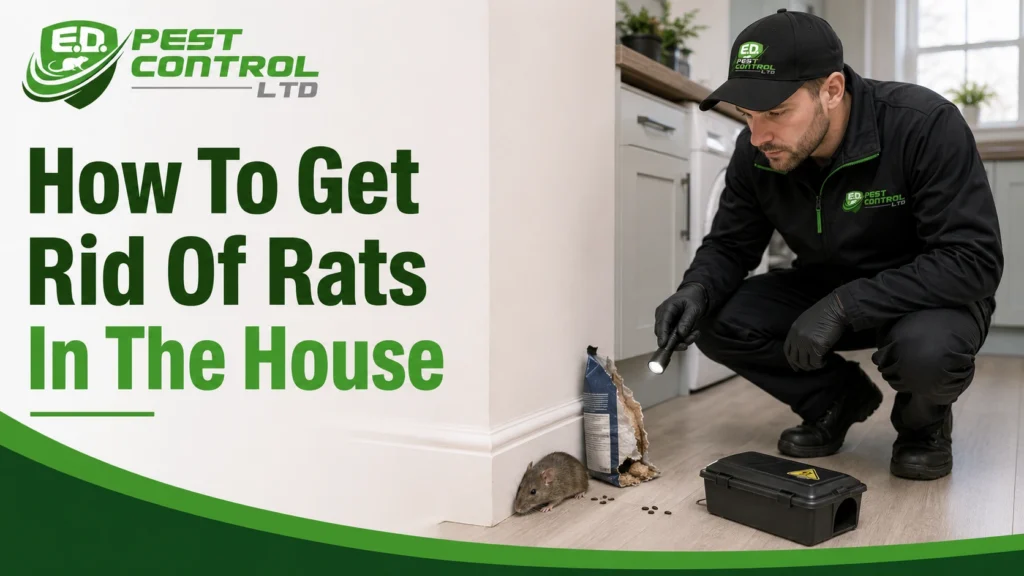
What are the Key Identifying Signs of Rats?
The first sign is rarely the rat itself. It’s the gnawed cables in the floor, scratching above the ceiling before bedtime, or the tiny droppings that seem to appear overnight. One clue doesn’t always mean you have rats. Together, they hint more strongly towards the suspect.
Here are the most common signs of rat infestation in your home:
- Rat droppings: Small, dark droppings near cupboards, appliances, or along walls.
- Gnaw marks: Chewed food packaging, wood, plastic, pipes, or electrical cables.
- Scratching noises: Sounds in walls, ceilings, lofts, or under floorboards, usually at night.
- Musky odour: A strong smell caused by rat urine and droppings.
- Grease marks: Dark smears along walls or pipes from repeated travel.
- Nests or burrows: Shredded materials indoors or fresh burrows around the garden.
- Damaged food: Torn food packaging or signs of feeding.
- Live rats: Seeing one during the day often indicates a larger infestation.
How to Get Rid of Rats in the House? Step-by-Step Instruction
Rats are stubbornly persistent. Every day you wait gives them more time to grow, spread, and take over your house. It takes more than a trap or a box of bait to solve the problem. Plus, killing some of them won’t solve this mysterious hide-and-seek.
A successful approach targets the infestation from every angle and makes your home a place rats can’t survive or return to. Let’s delve into the step-by-step guide on how to get rid of rats:
Step 1: Confirm the Infestation
Before choosing a pest control method, confirm whether you have rats or mice. Look for fresh droppings, gnaw marks, grease trails, nests, footprints, and scratching noises in lofts, kitchens, garages, cupboards, and under floorboards.
Rat droppings are larger, usually 12 to 20 mm long and blunt at the ends, while mouse droppings are smaller, around 3 to 8 mm long with pointed ends. Rats also leave heavier grease marks, make louder noises, and cause more substantial damage. Mice leave smaller, scattered droppings and can enter through very narrow gaps. Identifying the active areas and rodent type helps you choose the most effective removal method.
Step 2: Find and Seal Entry Points
Inspect both the inside and outside of your home. Check gaps around pipes, air bricks, vents, damaged brickwork, doors, and drain connections.
Rats can squeeze through openings as small as 15-20 mm. Seal gaps with durable materials such as steel wool, wire mesh, or cement. Avoid relying on expanding foam alone, as rats can chew straight through it.
Step 3: Remove Food and Water Sources
Rats stay where food and water are easy to find. Store dry food and pet food in airtight containers, wipe up crumbs, empty bins regularly, and avoid leaving food out overnight. Also, keep the trash bin far away from the door.
Repair leaking taps and pipes, and remove standing water wherever possible. The fewer resources available, the less attractive your home becomes to rats.
Step 4: Set Traps in the Right Locations
Snap traps remain one of the fastest and most effective ways to control rats indoors. Place them along walls, behind appliances, inside lofts, or near droppings and grease marks, where rats naturally travel. Bait them with peanut butter, chocolate spread, or dried fruit, and leave them undisturbed for a few days if rats appear cautious.
Step 5: Use Rodenticides Carefully
Rodenticides may be necessary when trapping alone isn’t enough. Always use them inside tamper-resistant bait stations to reduce the risk to children, pets, and wildlife. Follow the manufacturer’s instructions carefully, and check bait regularly to remove dead rats before they create unpleasant odours. If DIY control fails or infestation gets severe, hire experts.
Step 6: Hire Professionals
If the infestation is large, keeps returning, or involves hard-to-reach areas like cavity walls, drains, or loft spaces, it’s time to call licensed professionals like E.D. Pest Control. Pest control experts carry out a full property inspection, identify hidden nests, use commercial-grade treatments, and seal potential entry points. They also know how to use rodenticides safely and in line with UK regulations, reducing the risk to people, pets, and wildlife.
Step 7: Monitor the Results
Getting rid of rats doesn’t end when the traps stop catching them. Continue checking for fresh droppings, new gnaw marks, or scratching noises over the following weeks. Keep entry points sealed and maintain good hygiene to prevent new rats from moving in. If activity continues despite your efforts, it’s time to bring in professionals.
How to Prevent Rats For Good?
Getting rid of rats feels like the finish line. In reality, it’s the beginning of keeping your home rat-free.
Rats are opportunistic. If they find an easy way back in, they’ll return without hesitation. Even a tiny gap in the wall or a forgotten food source can invite a new infestation. That’s why prevention is just as important as extermination.
The best way to deal with rats is to make your home impossible for them to live in. No easy access. No reliable food. No safe place to nest.
Follow these simple steps to keep rats out for good:
✔ Seal Every Possible Entry Point
Inspect your property regularly for gaps around pipes, air bricks, vents, doors, and damaged brickwork. Repair cracks promptly and fit copper or stainless steel mesh over vents where necessary. Blocking access is one of the most effective ways to prevent rats from getting inside.
✔ Store Food Properly
Keep dry food, pet food, and birdseed in airtight containers. Wipe up crumbs, clean spills quickly, and avoid leaving food (even pet food) or water out overnight. A reliable food source is one of the main reasons rats stay.
✔ Keep Bins Secure
Use bins with tight-fitting lids and empty them regularly. If you keep outdoor bins, position them away from doors and keep the surrounding area clean.
✔ Fix Leaks and Remove Water Sources
Rats need water as much as food. Repair leaking taps, damaged pipes, and overflowing gutters, and remove any standing water around your property.
✔ Maintain Your Garden
Trim overgrown shrubs, clear piles of wood or rubbish, and keep compost bins well managed. An untidy garden provides ideal shelter and nesting sites for rats.
✔ Inspect Your Home Regularly
Check lofts, garages, under sinks, and other quiet areas for fresh droppings, gnaw marks, or unusual smells. Spotting a problem early makes it much easier to deal with before it becomes a full-scale infestation.
When is Professional Rat Control Necessary and Why?
There comes a point when traps stop being enough. You replace the bait. Set more traps. Seal another gap. Yet the signs never truly disappear.
That’s because the rats you see are often only a small part of the infestation. The rest may be hidden behind walls, beneath floorboards, or inside the drainage system. Removing a few rats won’t stop an infestation that’s already growing behind the scenes. That’s when professional rat control becomes the smartest and only way out.
When Should I Call in Professionals?
Let’s uncover situations when professional rat control becomes necessary:
⚠ The Infestation Keeps Coming Back
If rats return despite using traps and sealing entry points, there may be hidden nests or access routes you’ve missed. A professional inspection can identify the source of the problem.
⚠ There Are Signs of a Large Infestation
Large numbers of droppings, frequent sightings, strong odours, or constant scratching noises usually indicate more than just one or two rats. Larger infestations require a more comprehensive treatment plan.
⚠ Rats Are in Hard-to-Reach Areas
Rats nesting in cavity walls, lofts, drains, or beneath floorboards are difficult to remove without specialist equipment. Professionals know where to look and how to treat these areas safely.
⚠ Your Property Has Suffered Damage
Chewed electrical cables, damaged insulation, contaminated food, or gnawed pipes can create serious safety risks. Professional pest control services can eliminate the infestation before the damage becomes worse.
Why is Calling in Professionals Essential?
Professional pest control offers more than just rat removal. Here’s what qualified experts offer:
- Thorough Property Inspection: Identifies the extent of the infestation, nesting sites, and rat activity.
- Locates Entry Points: Finds gaps, damaged drains, and other access routes that rats use.
- Safe and Effective Treatment: Uses commercial-grade rodenticides, traps, bait stations, and approved control methods complying to the UK Regulations.
- Removes Hidden Infestations: Targets rats in lofts, cavity walls, drains, and other hard-to-reach areas.
- Reduces Health and Safety Risks: Handles rodenticides safely and lowers the risk to children, pets, and wildlife.
- Provides Long-term Prevention: Recommends rodent-proofing measures to stop rats from returning.
- Saves time and money: Resolves persistent infestations faster and helps prevent costly property damage.
Bottom Line
Rats are more dangerous than an unwanted nuisance. They can damage your property, pose serious health risks, and even cause fire hazards. Without prompt action, a small problem can quickly develop into a major infestation.
Learning how to get rid of rats in the house is a necessity, not a choice. Start by identifying the signs of an infestation, sealing entry points, and using effective control methods. Just as importantly, maintain good hygiene and inspect your property regularly to prevent rats from returning.
If the infestation is large, do not wait to call a professional pest control expert. Quick action, thorough sealing, professional targeted treatment, and ongoing maintenance are essential for successful rat control.
Your Most Asked Questions About Rat Extermination in UK Homes
What kills rats immediately in the house?
Snap traps and electric traps are the fastest and most humane ways to kill rats instantly. Rodenticides work strongly, too, but usually take several days to kill rats.
How many rats do I have if I see one?
Rats are social animals and usually live in colonies. If you spot one, especially during the day, there’s a good chance more are hiding nearby.
How do I know if Rats are gone?
No fresh droppings, gnaw marks, scratching noises, or trap activity for two to three weeks usually indicates the infestation is gone.
Is Professional rat control worth it?
Yes, it is. Professionals identify hidden nests, exterminate with targeted follow-up treatments, and help prevent rats from returning.
Where do rats hide during the day?
Rats usually hide in lofts, cavity walls, under floorboards, garages, sheds, drains, behind kitchen appliances, and undisturbed spaces during the day. They stay close to food and water.
How to draw a rat out of hiding?
Place baited traps along walls or near fresh droppings, using foods like peanut butter or dried fruit. Leave the area undisturbed. Rats will cautiously come out.
What month are rats most active?
Rats remain active throughout the year. But infestations often increase during autumn and winter as they move indoors in search of warmth, food, and shelter.
Do rats go near sleeping people?
It rarely happens. Rats generally avoid human contact and are most active when homes are quiet. They can be spotted near humans only if the infestation is severe.