When pest infestation takes over a property, finding out the best pest control method for that pest type becomes crucial. In the UK, there are a bunch of options.
So what are the different pest control methods? Modern pest control includes methods like chemical, biological, physical, mechanical, and integrated pest management (IPM).
For some pests, you might approach combined methods with follow-up treatments. Some of the pesky nuisances are so stubborn and difficult to get rid of.
Personal preferences may also matter. Some might trust chemical pest control, while someone else wants a humane method like biological pest control. But at the end of the day, it’s beyond just a choice; it’s about choosing the most effective method.
Let’s walk you through the pest control methods, their differences, which pest control works best, and why. Dive in.
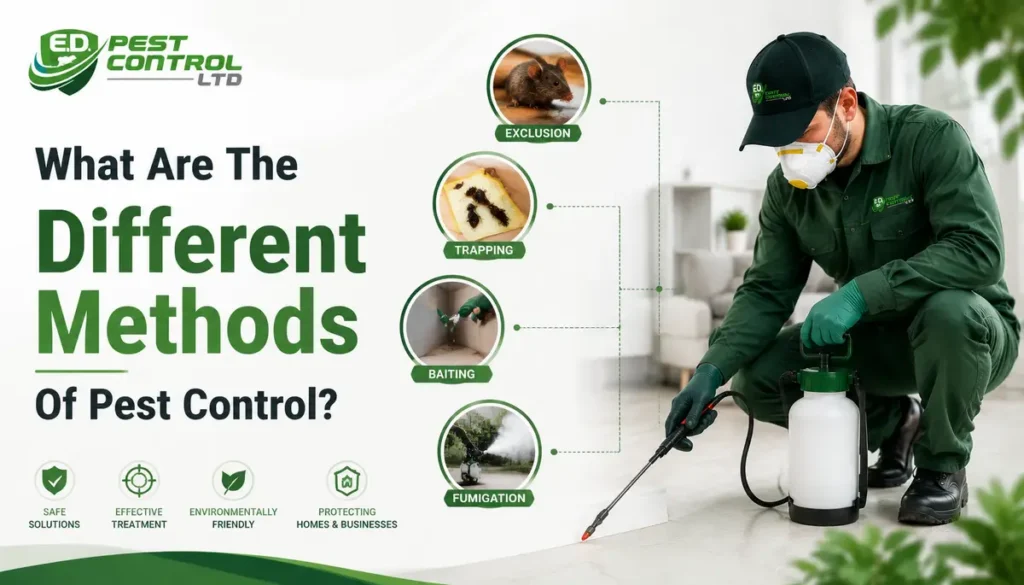
What Are The Best Pest Control Techniques?
Pest control methods are not one-size-fits-all. Different treatment methods work against different pests. To choose between them or even to discuss them, you have to know about the methods.
Here are the top pest control methods in the UK:
⏹ Chemical Pest Control
The chemical method is one of the most popular and widely used methods. It works instantly. The method uses pesticides, insecticides, rodenticides, or other chemical products to control or eliminate pests.
These toxic pest killers come in different textures like sprays, gels, baits, dusts, etc.
But here’s the thing. The success of chemical pest extermination relies not only on the products, but it also relies heavily on the correct application. Plus, chemical products need careful handling.
So it should be done by licensed professionals like E.D. Pest Control who know about the right product and apply it safely.
⏹ Physical or Mechanical Pest Control
Physical pest control involves mechanisms, equipment, and tools. This includes trapping and prevention. You can reduce pests using bait traps like snap traps, live-capture cages, fly traps, etc. It’s the treatment part.
The next part of physical pest control is preventing pests’ reinfestation. This involves sealing cracks, installing mesh screens, fitting door sweeps, etc. It’s an old-school pest control method that includes no chemicals.
⏹ Biological Pest Control
Biological pest control flips the script by using nature against nature. Ladybugs eat aphids. Cats eat rodents. Nematodes target grubs in your lawn.
It’s slower, but it’s gentler on the ecosystem. Some of the strong beneficial insects(predators) are cats, ladybugs, predatory mites, nematodes, and parasitoid wasps.
Biological pest control can be mostly used to reduce garden pests. For a large infestation, it won’t be that beneficial.
⏹ Cultural Pest Control
Cultural control focuses on changing the environment so pests have fewer opportunities to survive and reproduce. It affects their lifespan as well.
Cultural methods make your property less attractive and less comfortable for pests. This method is often overlooked, yet it is extremely important.
For precise cultural control, keep foods sealed, remove waste, clean spills, reduce clutter, and eliminate any standing water.
⏹ Integrated Pest Management (IPM)
IPM deserves its own spotlight, honestly. It’s less a single technique and more a philosophy. It combines chemical, biological, and physical tactics based on what the situation actually calls for. IPM is considered the most practical approach as it focuses on long-term control.
This approach begins with inspection and identification. The pest is identified, the source is investigated, and the level of infestation is assessed. No treatment happens blindly.
Next comes prevention. Cultural control quietly does most of the heavy lifting here. Then monitoring goes on. Finally, IPM reaches its stronger tools. For minor issues, physical/mechanical control might be enough.
Biological control can go side by side. The last resort is chemical control with precisely applied pesticides. It actually addresses the root cause, not just the symptoms.
Certified pest control companies in London like E.D. Pest Control eliminates pests using IPM, and that’s IPM in action.
Comparing The Different Pest Control Methods
Every pest control method operates on a different mechanism of action. Some target the nervous system. Some disrupt breeding cycles. Others simply remove access. That means each one performs differently across speed, safety, cost, and long-term efficacy.
Here’s how they actually stack up:
| Pest Control Method | Speed of Pest Extermination | Safety | Best Works For | Major Drawbacks |
| Chemical Control | Fast and Instant | Moderate Risk to pets, kids, and pollinators | Severe or urgent infestations | Chemical exposure if misapplied; leaves pests aggressive if applied inefficiently |
| Physical Control | Immediate for trapped pests | Zero chemical risk | Small to moderate pest infestations | This method can’t handle large infestations |
| Cultural Control | Preventative in the long term; doesn’t show immediate results | Completely Safe | Stopping future infestations | Won’t resolve an active problem |
| Biological Control | Slow | 100% Safe, and Eco-friendly | Garden and outdoor pests | Takes weeks to show results |
| IPM(Integrated Pest Management) | Varies by stage | Minimises risk overall | Long-term whole property management | May require more planning and time upfront |
Which Pest Control Method Works The Best And Why?
In the UK, everyday pests are infesting random properties. You can’t claim a single method as the best pest control method. It can’t be judged or decided like that. The answer varies from situation to situation.
For example, rodent control may involve sealing entry points, removing food sources, and strategically placing traps. On the flip side, bed bugs can be controlled well using chemical or targeted heat treatment, vacuuming, and regular monitoring. However, IPM works best for pest extermination.
In IPM, chemical, physical, biological, and cultural treatments with a licensed pest control service work effectively. It combines the methods based on the situation and requirements. So both the short-term and long-term benefits of pest control are ensured with IPM.
The ultimate goal is to interrupt their life cycle and survival, using targeted treatment, preventing reinfestation, and keeping monitoring.
Bottom Line
A single pest control method doesn’t work for every property in the UK. That’s why homeowners often ask, what are the different methods of pest control we should use?
Once you understand the methods, you can easily understand which one you might need and when you should call professionals.
Chemical control can provide fast results. Physical and mechanical methods can remove or block pests. Biological control uses natural enemies.
Cultural control makes an environment less attractive to pests. And Integrated Pest Management combines these approaches for a more complete solution.
The right choice depends on the pest species, infestation level, property type, and source of the problem. Recognise the pest type with signs. Then choose the most effective method against that pest.
Your Most Asked Questions About Different Pest Control Types
1. What Is The Most Effective Pest Control Method?
The most effective pest control method in the UK is Integrated Pest Management (IPM). It combines chemical, physical, biological, and cultural methods for long-term pest control and prevention.
2. How Long Does Pest Control Treatment Last?
Professional pest control treatment lasts for 30 to 90 days indoors. The treatment remains active up to 30 days outdoors.
3. Can I Sleep In My House After Pest Control?
Definitely. You might need to wait for 2-4 hours after a professional pest control treatment to let the chemicals dry and the air be clearer.
4. What Are Some Natural Methods Of Pest Control?
Introducing beneficial pest predators, using essential oils, setting up diatomaceous earth barriers, sealing cracks, eliminating food sources, maintaining sanitation, etc.
5. What Are The Five Main Methods Of Pest Control?
The five major pest control methods are chemical pest control, physical/mechanical pest control, biological pest control, cultural pest control, and IPM.
6. Is Physical Pest Control More Effective Than Chemical?
Their functions are different. Physical pest control traps pests, a more humane option, and prevents reinfestation. It’s suitable for exterminating small infestations and for prevention. Chemical pest control kills pests instantly. It is suitable for larger infestations.